
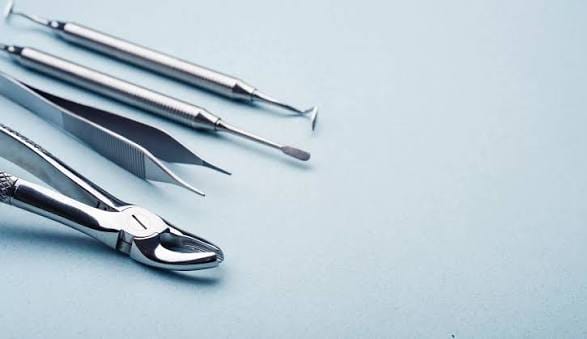
The importance of identifying Dental Instrument Names and knowing their uses.
The first time I walked into a dental treatment room as a student, I counted fourteen instruments laid out beside the chair before the procedure even started. I had no idea what most of them were called. That gap in my knowledge was a problem, not just for passing examinations, but for the actual work of assisting, setting trays, sterilizing instruments, and communicating clearly with the dental team.
If you are a dental student, a dental nurse, a hygienist, or a patient who simply wants to understand what is happening in your mouth, you are reading the right guide. I wrote this using direct clinical experience, the same dental tools names and uses I have encountered while handling, setting up, and sterilizing instruments across general dentistry, periodontics, and oral surgery.
Previously I listed 112 instruments. That is a solid starting point, but dentistry is broader than a single list of basic dental instruments. We’ve checked and include more instruments we’ve seen and I noticed it is missing entire specialties. Endodontic instrument names, implantology tools, orthodontic instruments names, and prosthodontic
This article now have 200 instrument names across ten departments and categories.
Well organized, so you can quickly find the types of dental instruments you need for any procedure.
| HOW I KNOW THIS My experience with dental instrument names comes from direct clinical observation in general dental practice, hands-on dental tray setup and sterilization workflows, and close study of published instrument manuals. I referenced Bird and Robinson’s Modern Dental Assisting (13th Edition, Elsevier, 2021), the ADA Instrument Supply Manual (linked in sources below), current catalogues from Hu-Friedy and GDC, and Healthsoothe’s own related articles on dental elevators, extraction instruments, amalgam tray setup, and composite tray setup. |
What Is Dental Instrumentation?
Instrumentation in dentistry is the systematic process of identifying, selecting, and using the correct dental instruments and equipment for each clinical procedure. Every member of the dental team, including the dentist, dental nurse, dental hygienist, and dental technologist, is expected to know the dental tools list by name and function. When a dental nurse cannot identify an instrument by name in the middle of a procedure, it slows the entire team down.
Before we go through the full list of dental instrument names, you need to understand the three parts that every hand instrument has:
- Working End: This is the part that contacts the tooth or tissue. On a probe, it is the calibrated tip. On a scaler, it is the sharpened blade. On an excavator, it is the spoon-shaped cup. This end defines what the instrument does and how it is classified in any dental tools list.
- Shank: The shank connects the working end to the handle. It may be straight, angled once (mono-angle), angled twice (bi-angle), or curved. The more complex the shank design, the deeper the access into the oral cavity. A longer, more curved shank reaches further below the gumline, which matters greatly for periodontal instruments.
- Handle: The part you hold. It may be smooth, serrated, or knurled for grip. Some instruments are double-ended, meaning there is a working end at each end of the handle. The spoon excavator paired with a carver is the classic example. Flip it over and you have a different function.
Instruments also come in three build configurations: single-ended (one working end, one handle), double-ended (a working end at each end of the handle), and corn socket (a detachable working end on a reusable handle, such as the mouth mirror).
How to Read This List
Each entry below includes the instrument number, its most commonly used name (with alternative names), and a clear description of its function. I have organized the dental instruments and their uses by clinical category rather than alphabetically, because that is how you encounter them in practice: grouped by the type of procedure you are setting up for. For procedure-specific setups, see the related articles on dental amalgam tray setup, composite filling tray setup, and prophylaxis tray setup.
The numbering runs sequentially from 1 to 200 across all categories so you can reference any instrument by number.
Category 1: Diagnostic Instruments (1 to 14)
The examination set, which consists of the dental mirror, dental probe, and college tweezers, is the foundation of every dental appointment. These are the basic dental instruments that every dental team member must identify instantly. All other instruments in this dental tools list are added based on the procedure required. For a deeper look at explorers and probes specifically, read the Healthsoothe guide on the dental explorer, periodontal instrument, and dental excavator.
| # | Instrument Name | Function and Clinical Use |
|---|---|---|
| 1 | Dental Mirror (Mouth Mirror) | Provides indirect visualization of the oral cavity, retracts soft tissue, and reflects light into hard-to-see areas. This is the single most used tool in any dental equipment list. Available in plane, concave, and front-surface types. |
| 2 | Dental Explorer (Sickle Probe) | A sharp-tipped instrument used to detect cavities, cracks, rough margins, and calculus deposits on tooth surfaces. The DG-16 variant specifically locates root canal orifices. |
| 3 | Periodontal Probe (Williams Probe) | A calibrated instrument marked in millimeter increments (1, 2, 3, 5, 7, 8, 9, 10) used to measure pocket depth around each tooth and assess the degree of periodontal attachment loss. |
| 4 | College Tweezers (Cotton Pliers) | Used for placing and retrieving cotton rolls, gauze, and small dental materials inside the mouth. The locking type holds items securely without continuous hand pressure. |
| 5 | CPITN Probe (WHO Probe) | Features a 0.5 mm ball tip and a black band between 3.5 and 5.5 mm; used to record Community Periodontal Index of Treatment Needs (CPITN) scores for gum assessments. |
| 6 | Nabers Probe (Furcation Probe) | A curved, calibrated probe specifically designed to explore furcation areas on multi-rooted teeth, helping classify furcation involvement in periodontal disease as Grade I, II, or III. |
| 7 | Briault Probe | A double-ended probe with right-angled working ends designed to detect interproximal decay that is otherwise invisible to a straight explorer. I reach for this one first on any suspect contact area. |
| 8 | North Carolina Probe | Standardized to 0.5 mm tip diameter with markings at every 1 mm up to 15 mm; the most reproducible probe for clinical research and precise pocket measurements. |
| 9 | Michigan Probe | A color-coded probe with markings at 3, 6, and 8 mm, ideal for quick basic periodontal screening in a busy general practice setting. |
| 10 | Endodontic Explorer (DG-16) | Angled working tip specifically engineered to locate root canal orifices in the pulp chamber floor. This is the most accurate canal-finding tool for calcified chambers. |
| 11 | Intraoral Camera | A small video camera that captures real-time high-resolution images of the oral cavity, used for patient education, diagnosis, and documentation. |
| 12 | Digital X-Ray Sensor (RVG Sensor) | Replaces traditional film for dental radiographs; delivers up to 80% less radiation than conventional X-ray film and produces immediate digital images. |
| 13 | Dental Probe No. 23 | A sharp, curved probe used for caries detection and exploring tooth surfaces for irregularities, fissures, or overhanging restorations. |
| 14 | Cheek Retractor (Lip or Cheek Retractor) | Plastic or metal device that holds the cheeks and lips away from the teeth during procedures or photography, providing clear access and visibility. |
Category 2: Scaling and Oral Hygiene Instruments (15 to 36)
Periodontal instruments are among the most specialized entries in any dental instruments and their uses reference. The difference between a scaler and a curette trips up more students than almost any other question. Your dental scaler names to know above all others are the sickle scaler (supragingival use) and the Gracey curettes (subgingival, area-specific use). For everything related to cleaning and sterilizing dental instruments read the Healthsoothe article on scaling procedures and sterilization guide.
| # | Instrument Name | Function and Clinical Use |
|---|---|---|
| 15 | Push Scaler (Sickle Scaler H6/H7) | Used for supragingival calculus removal on the buccal and lingual surfaces; the pointed tip reaches into cervical areas and contact points. |
| 16 | Jacquette Scaler | A double-ended scaler for removing subgingival calculus; a first choice for stubborn deposits in the lower anterior region. |
| 17 | Anterior Jacquette Scaler | Specifically angled for scaling anterior teeth; the working ends are contoured for easy adaptation to the curved surfaces of incisors and canines. |
| 18 | H6/H7 Sickle Scaler | The most commonly used sickle scalers in dental hygiene practice; one end works anteriorly and the other posteriorly. |
| 19 | Gracey Curette No. 1/2 | Designed for anterior teeth; the single cutting edge adapts precisely to the mesial and distal surfaces of incisors and canines below the gumline. |
| 20 | Gracey Curette No. 5/6 | Used on anterior and premolar teeth; one of the seven standard Gracey curettes that together cover the entire dentition. |
| 21 | Gracey Curette No. 7/8 | Designed for buccal and lingual surfaces of posterior teeth; essential for thorough periodontal debridement in molar regions. |
| 22 | Gracey Curette No. 11/12 | Used for mesial surfaces of posterior teeth; the offset blade angle ensures only one cutting edge contacts the root surface at any time. |
| 23 | Gracey Curette No. 13/14 | Designed for distal surfaces of posterior teeth; completing the set alongside No. 11/12 ensures all posterior root surfaces are reached. |
| 24 | Columbia Universal Curette (4R/4L) | A universal curette with two cutting edges; adaptable to all tooth surfaces, making it a versatile single periodontal instrument for full-mouth scaling. |
| 25 | Barnhart Curette No. 1/2 and No. 5/6 | An area-specific curette for scaling difficult posterior regions; the blade curvature provides better adaptation on root concavities. |
| 26 | Langer Curette | Combines the Gracey shank design with a universal blade; particularly useful for scaling around dental implants and furcation areas. |
| 27 | McCall Curette | A series of curettes for thorough subgingival scaling; popular in academic dental hygiene programs for teaching root surface debridement. |
| 28 | Periodontal File (Hirschfeld) | Used to remove very hard, tenacious calculus deposits that resist curettes; the serrated working surface crushes and fractures heavy calculus. |
| 29 | Ultrasonic Scaler Unit | A powered dental scaler that uses high-frequency vibrations (18,000 to 50,000 cycles per second) combined with water lavage to remove calculus, stain, and biofilm. |
| 30 | Ultrasonic Slim-Line Tip | A thin, straight tip for ultrasonic scalers specifically designed to reach subgingival deposits in deep periodontal pockets (up to 9 mm) without causing tissue trauma. |
| 31 | Piezoelectric Scaler Tip | Operates on a linear back-and-forth motion rather than elliptical; widely considered gentler on enamel and better for working on implant surfaces. |
| 32 | Air Polisher (Prophy Jet) | Delivers a high-pressure stream of air, water, and sodium bicarbonate or glycine powder to remove extrinsic staining and supragingival biofilm efficiently. |
| 33 | Prophy Cup (Rubber Cup) | A flexible rubber cup attached to a slow-speed handpiece; used with prophy paste to polish tooth surfaces after scaling. |
| 34 | Prophy Brush | A small stiff brush used with polishing paste to clean occlusal surfaces, pits, and fissures where a rubber cup cannot adapt. |
| 35 | Saliva Ejector | A low-volume suction tip placed on the floor of the mouth to continuously remove accumulated saliva during treatment. |
| 36 | High-Volume Evacuator (HVE) Tip | A large-bore suction tip used to rapidly remove water, blood, debris, and aerosols during cutting or ultrasonic procedures; essential for infection control. |
Category 3: Restorative Instruments (37 to 68)
Restorative dental tools names cover everything from hand-cutting instruments used in cavity preparation to the composite placement tools and matrix systems used in modern adhesive dentistry. If you are setting up for an amalgam procedure, the full instrument sequence is covered in the dental amalgam tray setup guide. For composite resin procedures, refer to the dental tray setup for composite fillings.
| # | Instrument Name | Function and Clinical Use |
|---|---|---|
| 37 | Spoon Excavator (Large and Small) | A spoon-shaped, sharp hand instrument used to remove soft, carious dentin from cavity preparations. I always use this after bur preparation to remove the last layer of soft decay by feel. |
| 38 | Enamel Hatchet | A hand-cutting instrument used to cleave enamel rods and refine cavity margins; works with a push-and-pull motion to sharpen internal line angles. |
| 39 | Bi-angle Chisel (Binangle Chisel) | An enamel-cutting instrument with two angle bends in the shank, used to plane enamel walls and remove unsupported enamel during cavity preparation. |
| 40 | Wedelstaedt Chisel | A curved chisel used to refine cavity walls and remove undermined enamel; the curved blade provides better access than a straight chisel in posterior preparations. |
| 41 | Gingival Margin Trimmer (GMT) | Used to bevel the gingival margin of Class II and Class V cavity preparations; available in mesial-angled and distal-angled designs. |
| 42 | Angle Former | A hand-cutting instrument used to form point angles and line angles within cavity preparations, particularly in Class III and Class V preparations. |
| 43 | Hoe Excavator | Used to remove decay and refine cavity walls; the blade is positioned perpendicular to the handle for effective chip and debris removal. |
| 44 | Amalgam Carrier (Syringe Carrier) | A tubular instrument used to transport and place amalgam into the prepared cavity; available in small, medium, and large tip sizes to match preparation depth. |
| 45 | Amalgam Plugger (Condenser) | Used immediately after placement to pack amalgam into the cavity and remove voids; available in round and flat tip variations for different preparation shapes. |
| 46 | Amalgam Carver (Discoid and Cleoid) | After initial condensation, the discoid end removes excess amalgam from occlusal surfaces and the cleoid end refines anatomy and removes flash from margins. |
| 47 | Lecron Carver | A dual-ended carver used to remove excess wax from models and amalgam from cavity margins; particularly useful in prosthodontic laboratory work. |
| 48 | Ball Burnisher | Rounds the margins of amalgam restorations after carving to seal the cavity margin and reduce microleakage; the spherical tip adapts well to curved surfaces. |
| 49 | Egg Burnisher | A football-shaped burnisher used to smooth the surface of amalgam and eliminate surface irregularities before the material sets completely. |
| 50 | Flat Plastic Instrument (Composite Placement Tool) | A Teflon-coated or titanium nitride-coated flat-bladed instrument used to adapt, shape, and condense composite resin without sticking. |
| 51 | Composite Compule Gun | A syringe-type dispenser that holds single-use composite capsules and expresses the material directly into cavity preparations for accurate, waste-free placement. |
| 52 | Matrix Band (Tofflemire) | A thin metal band that wraps around a prepared tooth to temporarily restore the missing wall of the cavity, allowing amalgam or composite to be packed without overflow. |
| 53 | Tofflemire Matrix Retainer | The metal frame device that tensions and holds the Tofflemire matrix band around the tooth; available in anterior and posterior configurations. |
| 54 | Sectional Matrix System (Palodent or Contact Matrix) | Uses small curved matrix bands with ring separators to create tighter proximal contacts in Class II composite restorations; produces better contact points than the Tofflemire system. |
| 55 | Wooden Wedge | Inserted into the gingival embrasure between two teeth to hold the matrix band firmly against the gingival margin and prevent excess material from escaping. |
| 56 | Plastic Wedge | Transparent or colored wedge used similarly to wooden wedges but does not absorb moisture; allows light transmission for photocuring composite in difficult-to-reach areas. |
| 57 | Mixing Slab (Glass Slab) | A thick glass plate used for hand-mixing zinc phosphate cement, glass ionomer, zinc oxide eugenol, and other dental cements; kept cool before use to extend working time. |
| 58 | Glass Ionomer Cement Spatula | A plastic or titanium-coated spatula used to mix glass ionomer cement on a paper pad; avoids metal contamination that would discolor the material. |
| 59 | Rubber Bowl | A flexible rubber container used for mixing impression materials (alginate) and plaster; the flexibility allows easy removal of the mixed material. |
| 60 | Mixing Spatula (Straight and Curved) | A stiff metal spatula used for vigorous hand-spatulation of alginate, plaster, and stone; the curved variant is better for incorporating powder into liquid without air entrapment. |
| 61 | Curing Light (LED Polymerization Light) | A high-intensity light source (430 to 490 nm wavelength) used to photoactivate composite resin, bonding agents, and resin cements; modern LED units cure in 10 to 20 seconds. |
| 62 | Amalgamator (Electronic Capsule Mixer) | An electronic mixing device that amalgamates pre-proportioned amalgam capsules at controlled speeds and times for consistent mix quality without mercury vapor exposure. |
| 63 | Mortar and Pestle (Traditional) | The traditional method of mixing amalgam alloy powder and mercury by hand, now replaced by capsule amalgamators in modern practice for safety reasons. |
| 64 | Dappen Dish | A small glass or plastic dish used to hold small volumes of bonding agent, etching gel, cavity varnish, or other materials during restorative procedures. |
| 65 | Half Hollenbach Carver | A carver used to check for overhanging margins on restorations; the thin blade passes interproximally to detect any excess material before it fully sets. |
| 66 | Interproximal Carver | A specialized carver designed to reach into tight proximal spaces to carve and finish amalgam or composite that extends between teeth. |
| 67 | Burnishing Instrument (Composite) | Used to smooth and compact the final increment of composite resin before light curing; improves surface finish and minimizes finishing time. |
| 68 | Retraction Cord Packer (Gingival Retraction Cord) | A small flat-bladed instrument used to pack medicated or plain retraction cord into the gingival sulcus to displace soft tissue before crown impressions. |
Category 4: Endodontic (Root Canal) Instruments (69 to 92)
Endodontic instrument names are some of the most technical in all of dentistry. These instruments are used during root canal treatment to remove infected pulp tissue, clean and shape the root canal space, and seal it with gutta-percha and sealer. Understanding the difference between K-files and H-files, and knowing when to use NiTi rotary systems versus hand files, is one of the core competencies that separates a confident operator from an uncertain one.
| # | Instrument Name | Function and Clinical Use |
|---|---|---|
| 69 | Barbed Broach | A fine wire instrument with sharp barbs used to remove the dental pulp and canal contents in one pass; available in extra-fine, fine, medium, and coarse sizes. |
| 70 | K-File (Kerr File) | The standard endodontic file available in sizes No. 6 to No. 140; used to clean, shape, and enlarge root canals through a combined rotary and push-pull filing motion. |
| 71 | H-File (Hedstrom File) | Has a more aggressive cutting action than K-files due to its S-shaped cross-section; used with a pull stroke only to remove dentin from canal walls. |
| 72 | K-Reamer | A file-like instrument with fewer flutes per unit length than a K-file; used with a reaming (rotary) motion to progressively enlarge the coronal portion of root canals. |
| 73 | Nickel-Titanium (NiTi) Rotary Files | Engine-driven files made of NiTi alloy with memory metal properties; used with a low-torque contra-angle handpiece to shape canals faster and with fewer errors than hand files. |
| 74 | Reciprocating File System (WaveOne or Reciproc) | A single-use NiTi file system that moves in a reciprocating clockwise and counterclockwise motion; minimizes file separation risk and simplifies canal shaping significantly. |
| 75 | Endodontic Spreader | A pointed, tapered instrument used during obturation to create lateral space in the canal for additional gutta-percha points; available in stainless steel and NiTi. |
| 76 | Endodontic Plugger (Condenser) | A flat-tipped instrument used during warm vertical compaction to push and condense softened gutta-percha apically and laterally within the root canal. |
| 77 | Lentulo Spiral (Paste Carrier) | A spiral wire instrument used in a low-speed handpiece to carry and distribute root canal sealer cement into the canal prior to obturation; ensures even coating of canal walls. |
| 78 | Gutta-Percha Points | Standardized cones of gutta-percha (a natural rubber material) used to obturate and seal the root canal after cleaning and shaping. |
| 79 | Paper Points | Standardized absorbent cones used to dry root canals after irrigation; available in sizes matching endodontic file standards to ensure a snug fit at working length. |
| 80 | Rubber Dam Clamp | A metal clamp that grips the cervical portion of a tooth to anchor the rubber dam in place; available in dozens of designs to fit different tooth types. |
| 81 | Rubber Dam Frame | A metal (Young’s frame) or plastic (Nygaard-Ostby) frame that stretches the rubber dam membrane and holds it away from the patient’s face. |
| 82 | Rubber Dam Forceps | Used to expand the rubber dam clamp for placement and removal; the beaks engage the holes in the wings of the clamp. |
| 83 | Rubber Dam Punch | A rotary punch device used to create precise holes in the rubber dam sheet for tooth isolation; the hole size must match the tooth size to create a proper seal. |
| 84 | Apex Locator (Electronic) | An electronic device that uses electrical resistance measurements to determine the working length of a root canal; reduces radiographic exposure during root canal treatment. |
| 85 | Endodontic Ruler and Stop Gauge | A metal ruler used to measure and set rubber stops on hand files to the exact working length before entering the canal. |
| 86 | Endo Stand and File Organizer | A foam or silicone block that organizes files by size during root canal treatment; prevents contamination and maintains the ISO size sequence. |
| 87 | Irrigation Needle (Monojet or Side-Vented) | A fine needle (27 or 30 gauge) attached to a syringe for delivering sodium hypochlorite (NaOCl) or EDTA irrigants into root canals; side-vented designs prevent apical irrigation accidents. |
| 88 | Gutta-Percha Removal File (D-RaCe or ProTaper Retreatment) | Specifically designed NiTi files used during endodontic retreatment to dissolve and remove existing gutta-percha from previously obturated canals. |
| 89 | Gates Glidden Drill | A flame-shaped rotary instrument used to flare the coronal two-thirds of root canals; available in sizes No. 1 to No. 6 and used in sequence from smallest to largest. |
| 90 | Peeso Reamer | A parallel-sided drill used to prepare the post space in a root canal after obturation; enlarges the canal space to receive a prefabricated post. |
| 91 | Pulp Tester (Electric Pulp Tester / EPT) | An electronic device used to assess pulp vitality by delivering a low-level electrical stimulus to the tooth; a response indicates the presence of vital pulp tissue. |
| 92 | Phomopressor | Used during pulpotomy procedures to apply a calcium hydroxide or formocresol dressing to the radicular pulp stump; less commonly used since MTA became the standard. |
Category 5: Surgical and Extraction Instruments (93 to 129)
Surgical dental instruments cover the broadest range of any category in this list. This section contains the most dental forceps names you need to know, along with the complete set of elevators used before forceps application. For the full elevators reference, including all pattern types and their socket positions, see the Healthsoothe article on dental elevators and their uses. For forceps selection during extraction procedures, the top 10 instruments used for dental extraction article gives you the clinical decision framework.
| # | Instrument Name | Function and Clinical Use |
|---|---|---|
| 93 | Dental Mirror (Retraction Use) | Doubles as a mouth mirror and soft tissue retractor during extractions and surgical procedures. |
| 94 | Coupland Elevator (No. 1, No. 2, No. 3) | A straight elevator used to dilate the alveolar socket by driving the instrument between the tooth and bone; No. 1 is used first, followed by No. 2 and No. 3 progressively. |
| 95 | Warwick James Elevator (Straight, Left, Right) | A set of three elevators used to remove lower third molar roots and dilate sockets; the curved working ends reach around the distal of teeth in awkward positions. |
| 96 | Cryer Elevator (Right and Left) | Cross-shaped elevators used to remove remaining roots after crown fracture; the triangular tip engages the root socket of an adjacent extracted tooth. |
| 97 | Winter Elevator | A T-bar elevator used to expand the socket vertically and luxate impacted lower third molar roots; the T-bar provides additional leverage. |
| 98 | Hospital Pattern Elevator | A heavy, large-handled elevator used for especially difficult extractions requiring greater force; commonly used for surgical removal of buried roots. |
| 99 | Periosteal Elevator (Molt Periosteal Elevator) | Used to raise and reflect the mucoperiosteal flap from the bone during oral surgical procedures; the sharp end initiates the incision and the blunt end reflects the flap. |
| 100 | Root Tip Pick (Crane Pick) | A fine, curved elevator used to tease out root tips remaining in the socket after root fracture; the hooked tip engages root fragment apices. |
| 101 | Heidbrink Root Tip Elevator | A bayonet-shaped root tip elevator designed to reach posterior root fragments in deep, narrow sockets. |
| 102 | Bayonet Forceps (Upper Bayonet) | S-shaped forceps used for extraction of upper third molars and upper retained roots in awkward posterior positions. |
| 103 | Upper Anterior Forceps (Straight Forceps) | Used for extraction of upper incisors and canines; the straight beaks are positioned on the buccal and palatal surfaces of the root. |
| 104 | Upper Right Molar Forceps | The beak faces rightward with one beak designed to engage the buccal furcation of upper right molars; recognizable by the right-pointing beak. |
| 105 | Upper Left Molar Forceps | Mirror image of upper right molar forceps; the left-pointing beak engages the buccal furcation of upper left molars. |
| 106 | Upper Universal Molar Forceps | A single forceps that can be used for both upper right and left molars; less tooth-specific but useful when specialist forceps are unavailable. |
| 107 | Upper Premolar Forceps | Beaks positioned for extraction of upper first and second premolars; the narrower beaks adapt well to the smaller root diameter of premolars. |
| 108 | Lower Anterior Forceps | Features a narrow, flat head with both beaks facing downward; used for extraction of lower incisors, canines, and premolars. |
| 109 | Lower Premolar Forceps | Has a semi-circular head profile; the beaks engage the buccal and lingual root surfaces of lower premolars. |
| 110 | Lower Universal Molar Forceps | Has two opposing pointed beaks designed to engage the buccal and lingual furcations of lower molars. |
| 111 | Root Forceps (Lower) | Small, narrow-beaked forceps used for extracting retained lower roots after crown separation. |
| 112 | Pediatric (Pedo) Forceps | Scaled-down versions of adult forceps designed for deciduous (baby) teeth in children; available in upper and lower molar, anterior, and premolar configurations. |
| 113 | Rongeur Forceps | A bone-cutting forceps used to trim sharp bony edges of the alveolus after extraction; the cutting beaks punch and remove small pieces of bone. |
| 114 | Bone File | A coarse, double-ended file used to smooth the alveolar ridge after extraction or resective surgery; filing motion removes sharp projections and irregularities. |
| 115 | Bone Chisel | Used with a mallet to section bone or remove bony spicules during surgical extractions of impacted teeth or alveoloplasty procedures. |
| 116 | Mallet | A surgical hammer used in conjunction with a bone chisel or osteotome to section bone with controlled impact force. |
| 117 | Scalpel Handle (No. 3 Bard-Parker) | The metal handle that accepts disposable scalpel blades; blade No. 15 is most commonly used in dentistry for gingival incisions. |
| 118 | Scalpel Blade No. 15 | The curved blade most used in oral surgery for mucosal incisions; available in sterile single-use disposable form. |
| 119 | Kirkland Periodontal Knife | A kidney-shaped knife used for incisions on the buccal and lingual surfaces during gingivectomy; the blade follows the contour of the gingival margin. |
| 120 | Orban Periodontal Knife (Interdental Knife) | A spear-shaped knife with cutting edges on both sides; used for supplemental interdental incisions in periodontal flap surgery. |
| 121 | Tissue Forceps (Adson Forceps) | Fine-tipped forceps used by the dental nurse to hold, stabilize, and retract soft tissue during surgical procedures; the thumb-ring design provides one-handed control. |
| 122 | Needle Holder (Webster or Mathieu) | Used to grip and pass the suture needle through tissue during wound closure; the locking ratchet holds the needle firmly at any angle. |
| 123 | Castroviejo Needle Holder | A fine, spring-loaded needle holder designed for delicate suturing in root coverage and microsurgical periodontal procedures. |
| 124 | Surgical Scissors (Iris and Dean) | Fine-tipped scissors used to cut sutures, trim tissue margins, and dissect soft tissue; the curved design provides access in confined spaces. |
| 125 | Suture Material (Resorbable and Non-Resorbable) | Resorbable sutures (e.g., Vicryl, Chromic Gut) dissolve over 10 to 21 days; non-resorbable sutures (e.g., 3-0 silk, nylon) require removal at 5 to 7 days. |
| 126 | Mouth Gag (Molt Mouth Prop) | A ratcheted device inserted between the upper and lower teeth to maintain the mouth in an open position when the patient cannot cooperate or is under sedation. |
| 127 | Bite Block (Rubber Mouth Prop) | A rubber wedge placed unilaterally between the teeth to maintain a partial opening and reduce jaw fatigue during long procedures. |
| 128 | Goldman-Fox Pocket Marker | A specialized forceps that creates perforation marks on the external gingival surface at the base of the pocket to mark the incision line for gingivectomy. |
| 129 | Periotome | An ultra-thin, flat-bladed instrument inserted into the periodontal ligament space to sever ligament fibers before extraction; enables atraumatic tooth removal that preserves alveolar bone for immediate implant placement. |
Category 6: Orthodontic Instruments (130 to 148)
Orthodontic instruments names form a distinct subset of the dental tools list because most of these instruments are used exclusively for brace treatment and appliance fabrication. If you work in a general practice that refers orthodontic cases, your minimum knowledge set is the bracket placement tweezers, the distal end cutter, the ligature tucker, and the wire cutter. If you assist in an orthodontic clinic, you will use all 19 instruments listed here.
| # | Instrument Name | Function and Clinical Use |
|---|---|---|
| 130 | Band Pusher (Posterior Band Seater) | Used to seat orthodontic bands around posterior teeth by pressing them apically along the buccal surface until they contact the gingival margin. |
| 131 | Band Biter (Bite Stick) | A plastic or rubber bite stick that the patient bites down on to seat the orthodontic band by occlusal force, particularly useful on molars. |
| 132 | Bracket Placement Tweezers (Bracket Holder) | Fine-tipped tweezers with serrated beaks used to pick up and precisely position ceramic or metal brackets on the labial surface of teeth before bonding. |
| 133 | Adam’s Plier (Orthodontic Plier) | A multi-purpose plier used to adjust clasps and retainers, form wire loops, and make precision bends in orthodontic wires inside the patient’s mouth. |
| 134 | Bird Beak Plier | A plier with one round and one square beak; used to form coils, loops, and precise angular bends in orthodontic wires, particularly for removable appliances. |
| 135 | Three-Jaw Plier (Three-Prong Plier) | Used for torquing and bending archwires in three planes; allows complex wire adjustments without distorting adjacent bends. |
| 136 | Distal End Cutter (Ligature Cutter) | Cuts archwires close to the last bracket without leaving a sharp projecting wire end; the safety-hold design catches the cut piece to prevent swallowing. |
| 137 | Wire Cutter (Orthodontic Scissors) | Heavy-duty cutters designed to trim stainless steel and NiTi archwires of varying gauge; essential for safe wire adjustments at every orthodontic appointment. |
| 138 | Ligature Tying Instrument (Ligature Tucker) | A fine-tipped instrument used to tuck ligature wire ends under the archwire after tying; prevents the wire ends from irritating the patient’s cheek. |
| 139 | Elastic Separator (Orthodontic Separator) | Small rubber rings placed between teeth 5 to 7 days before band placement to create interproximal space; available in standard sizes and multiple colors. |
| 140 | Separator Plier | Used to stretch and insert elastic separators between teeth; the two-pronged design expands the ring to thread it through the contact. |
| 141 | Elastic Module Holder (Artery Forceps) | Standard artery forceps adapted for threading elastomeric modules (O-ties) onto bracket wings to engage the archwire. |
| 142 | Power Chain (Elastomeric Chain) | A series of connected elastic rings placed over bracket wings to close spaces between teeth; the chain exerts continuous mesial or distal force as it relaxes. |
| 143 | Arch Wire (NiTi, Stainless Steel, or TMA) | The main wire running through bracket slots to deliver forces for tooth alignment; NiTi wires are used in early stages for their shape memory, steel wires in later stages for torque control. |
| 144 | Ligation Turner (Ligature Director) | A small hand instrument used to direct and tie wire ligatures around bracket slots; the fine tip reaches into tight spaces between adjacent brackets. |
| 145 | Ash Wire (Contour Wire) | A pre-formed stainless steel wire used to give shape and support to removable appliances and partial dentures; contoured to follow the arch form precisely. |
| 146 | Willis Bite Gauge | A graduated instrument used to measure the vertical dimension of occlusion and rest at the corners of the mouth; essential for complete denture fabrication and orthodontic planning. |
| 147 | Bracket Removing Plier (Debonding Plier) | Applies a shearing force at the bracket-enamel interface to remove bonded brackets without damaging enamel; the angular beak design minimizes enamel fracture risk. |
| 148 | Band Removing Plier | Inserts under the band margin and levers it occlusally for removal; the tip is designed to avoid cutting soft tissue during band removal. |
Category 7: Prosthodontic Instruments (149 to 166)
Prosthodontic instruments bridge laboratory and clinical work. Many entries in this section of the dental equipment list are used jointly by the dentist and the dental technologist during crown, bridge, and denture procedures. For crown preparation specifically, the clinical instrument tray is covered in the crown prep tray setup guide.
| # | Instrument Name | Function and Clinical Use |
|---|---|---|
| 149 | Impression Tray (Upper and Lower Stock) | Pre-formed metal or plastic trays used to carry impression material and record the form of the teeth and surrounding soft tissues; available in multiple sizes and arch forms. |
| 150 | Custom Impression Tray | A tray fabricated on a study model specifically for one patient; provides controlled and even thickness of impression material for higher accuracy. |
| 151 | Wax Knife (Le Cron Carver) | A flat-bladed instrument with a thin, sharp edge used to carve, trim, and add wax during prosthodontic laboratory and clinical procedures. |
| 152 | Wax Spatula (Cement Spatula) | A flat, flexible spatula used to manipulate molten wax and mix dental cements; the flexible blade adapts well to mixing on a glass slab. |
| 153 | Articulator (Semi-Adjustable) | A mechanical device that simulates mandibular movements; models are mounted on it to fabricate prosthetics in the correct occlusal relationship. |
| 154 | Face Bow (Earbow) | Records the spatial relationship of the upper arch to the temporomandibular joint (TMJ) hinge axis; transfers this relationship to the articulator. |
| 155 | Shade Guide (VITA Classical and 3D Master) | A standardized set of porcelain tooth shades used to select the correct color match for crowns, veneers, and denture teeth; evaluated under natural daylight conditions. |
| 156 | Crown Remover (Coronaflex or Richwil Crown Remover) | A device that uses compressed air impulses or adhesive tabs to apply force and dislodge temporary or permanent crowns from their preparations. |
| 157 | Crown and Bridge Scissors | Curved scissors used to trim, cut, and adjust metal and acrylic crown margins during provisional or definitive prosthetic procedures. |
| 158 | Denture Flask | A metal flask used to process acrylic resin dentures using heat-cured polymethylmethacrylate; the two-part flask holds the stone mold under pressure during curing. |
| 159 | Stock Teeth (Denture Teeth) | Pre-manufactured acrylic or porcelain teeth in standardized sizes, shapes, and shades used to replace missing natural teeth in full or partial dentures. |
| 160 | Bite Registration Wax | A soft wax material placed between the teeth to record the occlusal relationship; essential for mounting models on an articulator. |
| 161 | Bite Registration Paste (Vinyl Polysiloxane) | A dimensionally stable bite registration material that captures the occlusion more accurately than wax; records fine occlusal anatomy including cusp tips. |
| 162 | Plaster Knife | A heavy-bladed knife used to separate and trim dental plaster and stone models; requires a firm grip to prevent model damage. |
| 163 | Model Trimmer | An electric grinding wheel used to trim and shape dental plaster models to standard dimensions; creates a flat base and angled sides for articulator mounting. |
| 164 | Dental Vibrator | A vibrating platform used to settle and remove air bubbles from freshly mixed plaster and stone before pouring into impressions. |
| 165 | Ruler Gauge (Boley Gauge or Digital Caliper) | A precision measuring instrument used to measure tooth dimensions, alveolar ridge height, and prosthetic component dimensions to the nearest 0.1 mm. |
| 166 | Post and Core Instrument Set | Includes reamers, drills, and placement forceps specific to each prefabricated post system (e.g., Parapost or Flexi-Post) for post space preparation and cementation. |
Category 8: Implant Instruments (167 to 176)
Implant instruments represent a growing part of the dental tools list in any practice that places or restores dental implants. The most important rule I reinforce every time I work near implants: never use standard metal scalers or curettes on a titanium implant surface. The implant-grade PEEK and titanium instruments listed at entry 173 exist for a specific reason, and substituting a standard stainless steel curette damages the implant surface permanently.
| # | Instrument Name | Function and Clinical Use |
|---|---|---|
| 167 | Implant Motor (Contra-Angle Handpiece) | A precision electric motor with programmable torque and speed controls used to drill the implant osteotomy and tighten implant components; most systems require 20 to 50 RPM for final torque. |
| 168 | Implant Drill Kit (Pilot Drill and Twist Drills) | A sequential set of drills used to prepare the implant osteotomy in graduated diameters; starts with a 2 mm pilot drill and increases in 0.5 mm increments to final diameter. |
| 169 | Bone Osteotome | A series of instruments used to condense rather than cut bone; expands the osteotomy laterally by compacting cancellous bone, increasing bone-to-implant contact in poor-density sites. |
| 170 | Sinus Lift Instruments (Summers Osteotomes) | Curved, tapered instruments specifically designed for the osteotome sinus floor elevation (OSFE) technique; gently fractures and elevates the sinus floor membrane without perforation. |
| 171 | Implant Holder and Mount | A sterile, single-use carrier attached to the implant for insertion into the osteotomy without touching the implant surface; maintains sterility during placement. |
| 172 | Torque Wrench (Implant Ratchet) | A calibrated ratchet wrench used for final implant tightening; most systems require 25 to 35 Ncm for abutment screws to prevent screw loosening in function. |
| 173 | Implant-Grade Curettes and Scalers | Instruments made from plastic, PEEK, or titanium to avoid scratching the implant surface during maintenance; metal scalers must never contact titanium implant surfaces. |
| 174 | Cover Screw Driver and Abutment Driver | Hex or slot-head screwdrivers specifically sized to each implant system for placing and removing cover screws, healing abutments, and definitive abutments. |
| 175 | Membrane Tack and Punch | Used in guided bone regeneration (GBR) procedures; the punch creates holes in titanium mesh or resorbable membranes and the tack pins the membrane to the bone. |
| 176 | Bone Graft Syringe and Carrier | A syringe-type device used to pack and condense particulate bone graft material into extraction sockets, ridge defects, or sinus cavities. |
Category 9: Radiographic and Sterilization Equipment (177 to 182)
Every types of dental instruments discussion is incomplete without acknowledging the support equipment that makes safe, effective dentistry possible. The autoclave sterilizer is as important to your daily dental equipment list as the scaler. Without it, every instrument listed above represents a cross-contamination risk.
| # | Instrument Name | Function and Clinical Use |
|---|---|---|
| 177 | Lead Apron (X-Ray Protective Apron) | A 0.25 to 0.5 mm lead-equivalent apron placed over the patient during all dental radiographic procedures to protect the thyroid, gonads, and trunk from scatter radiation. |
| 178 | X-Ray Film Holder (Rinn XCP) | Positions dental X-ray film or digital sensors precisely at the correct angle and distance for parallel periapical and bitewing radiographs; reduces retakes and cone cuts. |
| 179 | Dental X-Ray Unit (Periapical, Panoramic, or CBCT) | Periapical units take individual tooth images; the OPG (Orthopantomogram) captures a full-arch panoramic view; CBCT provides three-dimensional imaging for implant planning. |
| 180 | Autoclave (Steam Sterilizer) | Uses pressurized steam at 121 degrees C or 134 degrees C for 3 to 18 minutes to achieve sterility; the gold standard for sterilizing all heat-tolerant dental instruments. |
| 181 | Ultrasonic Cleaner | Uses high-frequency (20,000 to 40,000 Hz) cavitation waves in cleaning solution to remove blood, debris, and biofilm from instruments before sterilization. |
| 182 | X-Ray View Box and Light Box | A backlit panel used to view conventional radiographic films; largely replaced by digital monitors in modern practices but still used where conventional film is in use. |
Category 10: General and Miscellaneous Instruments (183 to 200)
This final category covers the core chairside instruments and consumables that support virtually every procedure in the clinic. The high-speed and low-speed handpieces are among the most used items in the entire dental equipment list, yet they are frequently overlooked in basic dental instruments guides because they are assumed knowledge. This list does not assume knowledge. If you are building your understanding of dental instrument pictures and their matching names from scratch, include these.
| # | Instrument Name | Function and Clinical Use |
|---|---|---|
| 183 | Dental Syringe (Aspirating Cartridge Syringe) | A metal or plastic syringe designed to accept standard 1.8 mL local anesthetic cartridges; the aspirating type has a harpoon that allows the clinician to check for intravascular injection. |
| 184 | Dental Needle (Short and Long) | Short needles (20 to 25 mm) are used for infiltration anesthesia and short-span nerve blocks; long needles (32 to 38 mm) are used for inferior alveolar nerve blocks requiring depth penetration. |
| 185 | Topical Anesthesia Applicator | A cotton-tipped applicator or syringe used to apply topical anesthetic gel (benzocaine 20%) to the mucosa before needle insertion to minimize the discomfort of injection. |
| 186 | Air-Water Syringe (Triple Syringe) | Delivers air, water, or an air-water spray through a fine tip for rinsing and drying teeth and cavity preparations; an indispensable chairside instrument used in virtually every procedure. |
| 187 | High-Speed Handpiece (Air Turbine) | Operates at 300,000 to 400,000 RPM using compressed air; used with diamond and carbide burs to cut enamel, dentin, and metal during cavity preparation and crown reduction. |
| 188 | Low-Speed Handpiece (Electric or Air Motor) | Operates at up to 40,000 RPM; used for caries excavation, polishing, endodontic access, and laboratory work; provides more tactile feedback than high-speed. |
| 189 | Contra-Angle Handpiece Attachment | Attaches to the low-speed motor and accepts latch-type burs; the angled head provides access to posterior teeth and restricted areas. |
| 190 | Straight Handpiece Attachment | Accepts long-shank burs for laboratory work, model trimming, and oral surgery; rarely used chairside due to limited intraoral access. |
| 191 | Diamond Bur (Coarse, Medium, and Fine) | Rotary cutting instruments with diamond particles fused to a metal blank; coarse burs for rapid enamel removal, fine burs for finishing and polishing porcelain and composite. |
| 192 | Carbide Bur (Round, Pear-shaped, and Fissure) | High-speed carbide burs used for access cavity preparation, caries removal, and cavity refinement; the round bur for initial access, the pear or fissure bur for preparation outline. |
| 193 | Polishing Disc (Sof-Lex or Optidisc) | Flexible aluminum oxide discs used in sequence from coarse to fine to polish composite resin restorations; the sequential finishing produces a high-gloss surface. |
| 194 | Pumice Paste and Prophy Paste | An abrasive paste used with a prophy cup or brush for professional tooth polishing; fine-grit paste removes biofilm and staining without excessive enamel loss. |
| 195 | Wooden Spatula (Tongue Depressor) | A disposable wooden stick used as a cheek retractor, tongue depressor, mixing instrument, and clinical examination aid; the simplest and most-used disposable in any dental kit. |
| 196 | Dental Tray (Kidney Tray and Instrument Tray) | Metal or autoclavable plastic trays used to organize and carry instruments to the chairside; kidney trays are used for waste disposal during procedures. |
| 197 | Cotton Roll | Cylindrical rolls of absorbent cotton placed in the buccal and lingual sulci for moisture control; they absorb saliva and provide a dry field during restorative procedures. |
| 198 | Gauze Swabs (2×2 and 4×4 inches) | Used for wound debridement, blood and saliva control, and post-extraction wound dressing; non-woven gauze is preferred over cotton-filled gauze in surgical sites. |
| 199 | Dental Floss and Floss Threader | Used intraoperatively to check contact point tightness and locate subgingival calculus; also used to test the accuracy of crown seat and interproximal margin quality. |
| 200 | Pressure Anesthesia Syringe (Computer-Controlled CCLAD) | A computer-controlled injection system (e.g., The Wand or STA system) that delivers local anesthetic at a constant slow rate, reducing injection pain by preventing pressure peaks. |
Sterilization of Dental Instruments: The Workflow I Follow
Every dental instrument in this list must be sterilized between patients without exception. The 5 ways to clean and sterilize dental instruments guide covers each method in full detail. Here is the standard four-step workflow I follow:
- Pre-rinse: Rinse instruments under running water immediately after use. Dried blood and protein debris becomes significantly harder to remove by ultrasonic cleaning alone.
- Ultrasonic cleaning: Place instruments in an ultrasonic bath for 5 to 10 minutes. The cavitation action removes debris from fine instrument angles, including curette blades and file flutes, that a brush simply cannot reach.
- Inspection and packaging: Inspect each instrument for damage (bent tips, cracked handles, dull blades) and package in autoclave pouches. Damaged instruments should be removed from service, not sterilized and returned.
- Autoclaving: Run at 134 degrees C for 3 minutes (pre-vacuum cycle) or 121 degrees C for 15 minutes (gravity cycle). I use the 134 degrees C pre-vacuum cycle as it is faster and achieves more reliable penetration through complex instrument loads such as cassette sets.
Items that cannot tolerate heat, including certain rubber components and single-use plastics, are either cold-disinfected with 2% glutaraldehyde or discarded after one use. Single-use items in this dental tools list include: dental needles, scalpel blades, suction tips, and rubber dam sheets.
Frequently Asked Questions About Dental Instrument Names
What are the most basic dental instruments?
The examination set is where every appointment begins: the dental mirror, the dental probe, and the college tweezers. These three instruments are the foundation of the entire dental tools list. Every other instrument is selected based on the procedure to follow.
What is the difference between a scaler and a curette?
A dental scaler (typically the sickle scaler) has a pointed or sharp tip and is used supragingival, meaning above or at the gumline, to remove calculus from accessible tooth surfaces. A curette has a rounded toe and a curved, single-cutting-edge blade, making it safe to insert below the gumline without lacerating the sulcular epithelium. Gracey curettes are area-specific, meaning each curette number covers a defined set of tooth surfaces. Columbia and other universal curettes can be used throughout the mouth. If you can only learn two dental scaler names, learn the H6/H7 sickle scaler and the Gracey 13/14 curette.
What are endodontic instruments used for?
Endodontic instruments are used during root canal treatment to access, clean, shape, and obturate the root canal system. The process begins with the barbed broach to remove the pulp, proceeds through K-files and H-files for manual shaping or NiTi rotary files for engine-driven shaping, uses irrigating needles to deliver disinfectant, and finishes with spreaders and pluggers during gutta-percha obturation. Endodontic instrument names include both the hand instruments (K-file, H-file, reamer, broach) and the rotary NiTi systems (WaveOne, Reciproc, ProTaper).
What is the most commonly used instrument in dentistry?
In terms of daily frequency, the dental mirror, the dental explorer, and the air-water syringe are used at nearly every appointment in every procedure. The high-speed handpiece runs during the majority of operative and surgical procedures. These four items belong at the top of any dental equipment list you are compiling for a new clinic.
How many types of dental forceps are there?
A complete dental forceps set typically contains between 15 and 25 forceps, each designed for a specific tooth position and arch. The dental forceps names you need to know include upper anterior forceps, upper premolar forceps, upper right molar forceps, upper left molar forceps, upper universal molar forceps, upper bayonet forceps, lower anterior forceps, lower premolar forceps, lower universal molar forceps, and root forceps. Pediatric versions of each exist for primary teeth in children.
What orthodontic instruments names should I know first?
If you assist in orthodontic procedures, the first five orthodontic instrument names to master are the bracket placement tweezers, the distal end cutter (to prevent sharp wire ends), the ligature tucker, the wire cutter, and the band pusher. These are the instruments you will reach for at virtually every bonding and adjustment appointment.
What does a dental equipment list for a new clinic include?
A functional startup dental equipment list includes: the examination set (mirror, probe, tweezers), a high-speed handpiece and contra-angle attachment, a basic bur set (diamond and carbide), an air-water syringe, an aspirating syringe and needle kit, scaling instruments (sickle scaler and curette set), restorative instruments (excavator, plugger, carver, burnisher, matrix system), an autoclave, and an ultrasonic cleaner. Everything else is specialty-specific and added as services expand.
Key Takeaways
You now have a reference list of 200 dental instrument names organized across ten clinical categories. Here is what to carry with you from this guide:
- Every dental instrument has three parts: working end, shank, and handle. Understanding these three parts lets you describe, identify, and look up any instrument you encounter, even one not in this list.
- The examination set (mirror, probe, tweezers) is the foundation. Every other instrument in the dental tools list is category-specific.
- Gracey curettes are area-specific for periodontal use. Universal curettes like the Columbia 4R/4L work anywhere. Ultrasonic scalers complement hand instruments but do not fully replace them.
- NiTi rotary files have replaced stainless steel hand files as the clinical standard in endodontics. If you are still learning endodontic instrument names using only K-files, add the reciprocating and continuous-rotation NiTi systems to your knowledge set.
- Implant instruments require PEEK, plastic, or titanium tips to protect titanium surfaces. Standard metal scalers and curettes must never contact implant abutments. This is not a recommendation; it is a clinical rule.
- The autoclave sterilizer belongs on every dental equipment list alongside clinical instruments. Sterilization is not a support function; it is a patient safety function that runs in parallel with every procedure.
Sources and Internal References
The following sources were used directly in compiling and verifying this dental instrument names.
2 Comments
Excellent writing!
You are completely right, A dental specialist cares for your teeth, yet they don’t do that without legitimate instruments. Dental instruments assist your dental specialist with investigating explicit spaces of your mouth and perform particular activities.
PEDDLY IMPEX SURGICAL was established in 1995, with the vision of becoming the most reliable source of Dental & Surgical Instruments supplier having the mission of total customer satisfaction with true, honest commitments and business ethics. Based in Sialkot Pakistan the city known for the manufacturing of quality products worldwide, we are approaching the progressive market leaders of the world who are looking for a reliable manufacturer/supplier with the best product for their price. We believe in commitment towards quality, which has a generation of skilled employees and quality vendors for raw material and with manufacturing experience of more than a decade in this field.
The quality management system has been properly implemented and is successfully working at all production stages. This is indeed a result of constant, professional, and vigorous efforts carried out by our most responsible staff members and skilled workers. Its adequacy is kept in check on a regular basis by conducting internal audits undertaken by our most experienced experts.
Our products as appearing on our website are available in German Steel, Japanese Steel, Carbon Steep, and Pakistani Steel. Samples and prices can be obtained on demand with specifications. Deliveries of the orders in any quantity are ensured within time and in excellent quality without any minor flaw.
You can send your own original samples, drawings, photo or article numbers of any International Catalogues for making the counter sample under your specifications for approval.